
-
Willie Greer
- June 22, 2021
A passive soundbar may allow for more customization and offer exceptional sound, but they can also be more complicated to set up. To help you purchase one that causes the least problems while still being top quality, our team of experts has thoroughly tested your options for the best passive soundbars.

Motion SLM X3
- 20–140W amplifier power
- 3k Hz crossover frequency
- Folded motion tweeters
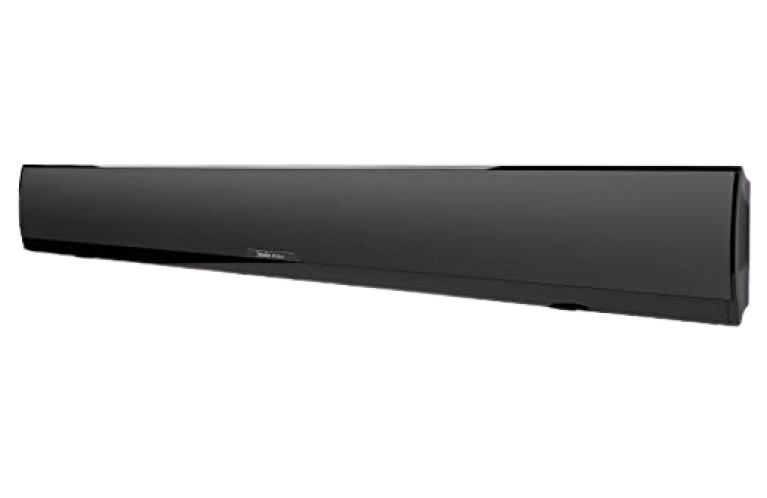
XTR-SSA5
- Spatial Array technology
- XTDD technology
- Aircraft-grade enclosure
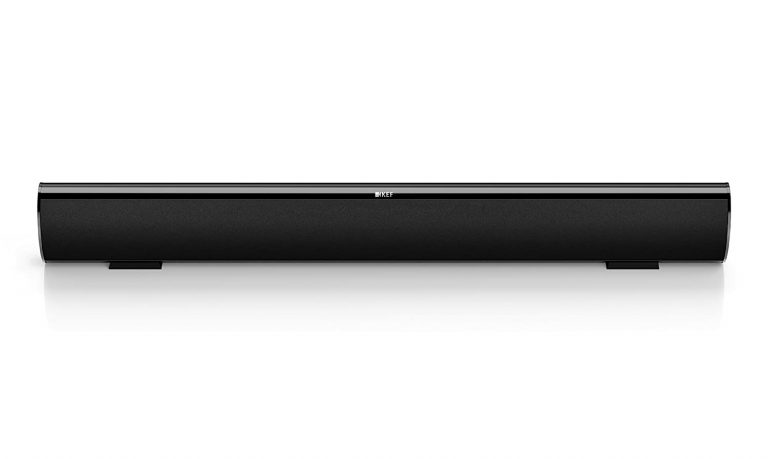
HTF8003
- Single aluminum enclosure
- KEF's patented driver array
- Perfect for 42" flat panels
At A Glance: Our Top 5 Picks for Passive Soundbars
- Best Overall: Definitive Technology XTR-SSA5 Ultra Slim Surround Speaker Bar
- Best Premium Choice: Martin Logan Motion SLM X3 Ultra-Slim 3-Channel Passive Soundbar
- Best Durability: KEF HTF8003 Soundbar Speaker
- Polk Audio Signature Series S35
- Dayton Audio BS36 36” LCR Speaker Bar
| IMAGE | PRODUCT | |
|---|---|---|
Best Overall 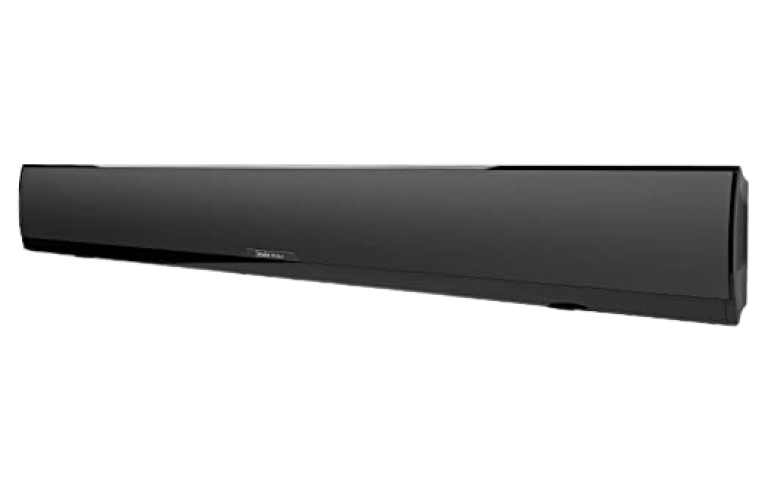 | Definitive Technology XTR-SSA5 Ultra Slim Surround Speaker Bar
| Our Rating: 100% VIEW LATEST PRICE → |
Best Premium Choice  | Martin Logan Motion SLM X3 Ultra-Slim 3-Channel Passive Soundbar
| Our Rating: 95% VIEW LATEST PRICE → |
Best Durability 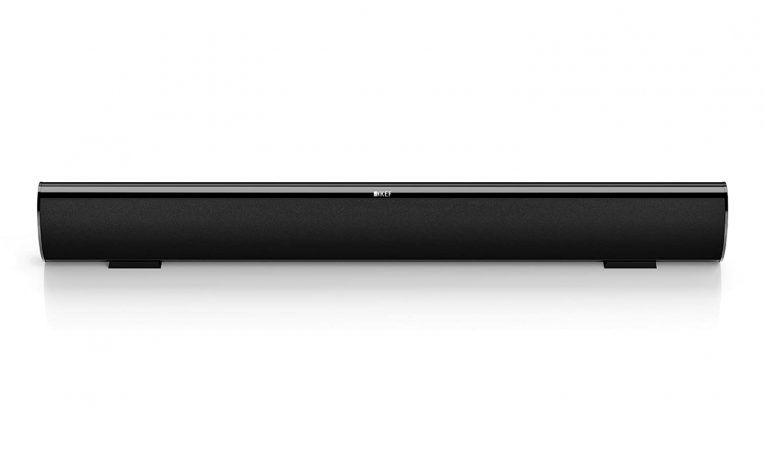 | KEF HTF8003 Soundbar Speaker
| Our Rating: 92% VIEW LATEST PRICE → |
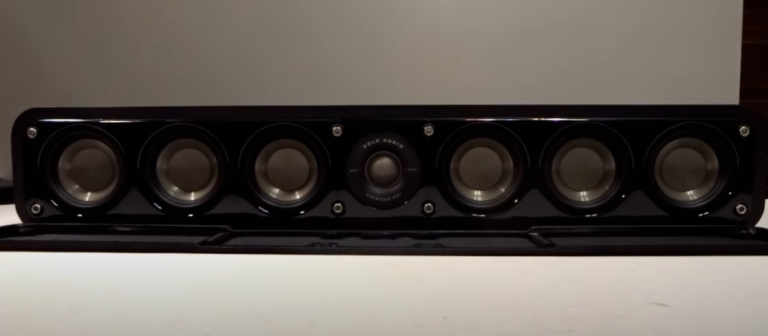 | Polk Audio Signature Series S35
| Our Rating: 88% VIEW LATEST PRICE → |
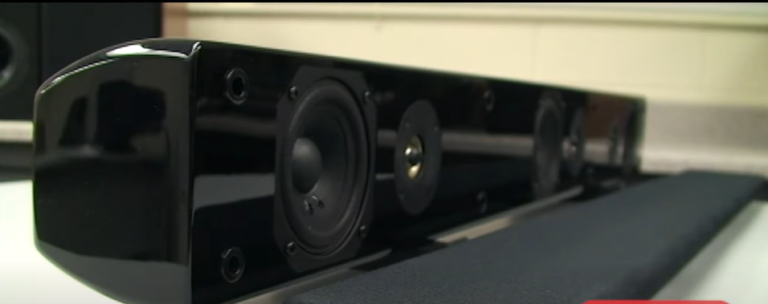 | Dayton Audio BS36 36” LCR Speaker Bar
| Our Rating: 96% VIEW LATEST PRICE → |
Reviews of the Best Passive Soundbars
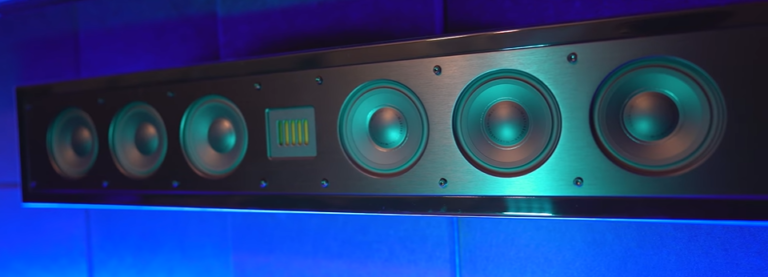
Martin Logan Motion SLM X3 Ultra-Slim 3-Channel Passive Soundbar
The Martin Logan SLM X3 passive soundbar has an angular and simple design that’s affordable and compact. You can either wall mount the device or place it on your entertainment unit for an elegant look.
One of the slimmest passive soundbar options around, the Martin Logan Three-Channel Passive Soundbar fits well with thin TVs without compromising its audio capabilities.
The soundbar also features high quality electrostatic speakers with three channels and folded motion tweeters. The soundbar was carefully designed with expert engineers to provide a well-tuned device that can relay clear sound. Paired with powerful folded motion transducers, this three-channel passive soundbar offers impressive bass to punctuate your content.
What We Like
- Sleek and compact system
- Designed to be wall-mountable
- Superb electrostatic speakers
- Powerful transducers
- Impressive bass
- Powered by folded motion tweeters
- Three-channel soundbar
What We Don't Like
- No wireless capabilities
- No external subwoofer
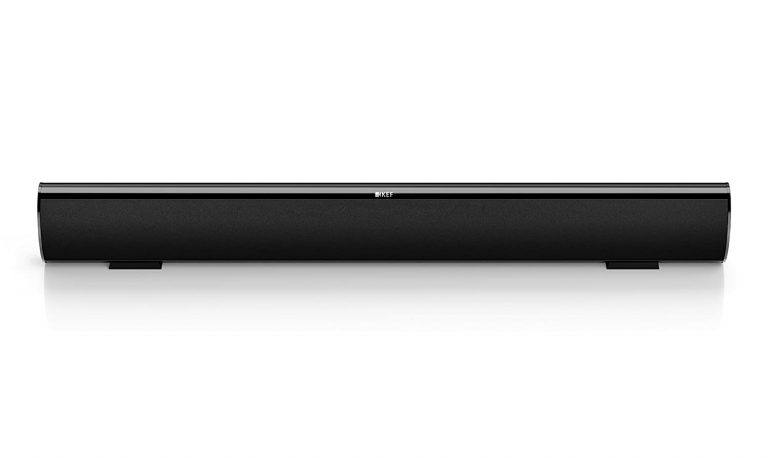
KEF HTF8003 Soundbar Speaker
The KEF HTF8003 utilizes its patented driver array and aircraft-grade materials to make a sturdy soundbar that can produce impressive acoustics.
The KEF soundbar speaker has a glossy finish with a sleek design that looks great with any flat panel TV 42 inches or larger. You can easily place it on a flat surface or mount it with the included table stand.
This KEF model is a 2-way bass reflex passive soundbar that has an increased frequency response, higher sensitivity and an appealing 87 db of powerful sound, based on our reliable decibel meter app. The tweeters for the KEF speakers are mounted at the center of the cone and are responsible for wide audio dispersion.
What We Like
- 2-way bass reflex
- Powerful output
- Increased frequency response
- High-sensitivity soundbar
- Features center-mounted tweeters
- Great for larger flat panel TVs
- Sleek design
- Robust structure
- Can be mounted on the wall
What We Don't Like
- No external sub
- No wireless Bluetooth
Polk Audio Signature Series S35
The Polk Audio Signature S35 is a center channel soundbar speaker with all the bells and whistles. It’s very slim but capable of surround sound with a dynamic acoustic array of three drives and one tweeter.
The small and compact passive soundbar similar to ZVox Accuvoice AV157 is endowed with Polk’s patented Power Port Technology that minimizes distortion to deliver richer and deeper bass. The soundbar speaker is very versatile and can integrate with 2.1 to even 9.1 systems.
Polk also put a lot of effort into crafting a visually appealing piece of audio equipment with the rounded edges that mirror acoustic guitars.
What We Like
- Passive center soundbar speaker
- Surround sound capable
- Dynamic acoustic array
- Compact design
- Sleek exterior with wood finish
- Integrates easily
- Polk Power Port Technology
What We Don't Like
- A little heavy
- Works better as a component speaker
Dayton Audio BS36 36” LCR Speaker Bar
The Dayton Audio BS36 soundbar is another LCR speaker option. It blends the three channels (left, right, and center) together seamlessly to have a dynamic impact when you play stereo. You can use it to add bass to otherwise flat TV speaker sound.
The Dayton Audio soundbar is designed with subwoofers to produce high definition and reverberating bass notes for any content.
You can connect this three-channel soundbar easily to any TV and either wall mount it or place it on top of your entertainment unit. Everything you need to connect this soundbar is included in the box, so you don’t have to buy any separate product for the setup.
It’s a small and compact soundbar that packs a punch. The sleek and understated design also works well with any interior or wall space.
What We Like
- LCR speaker soundbar
- Fits with any flat screen TV
- Powered by dynamic subwoofers
- Flexible placement, whether you wall mount it or not
- Small size
- Sleek and minimalist design
What We Don't Like
- No wireless streaming
- Not complete surround sound
Definitive Technology XTR-SSA5 Ultra Slim Surround Speaker Bar
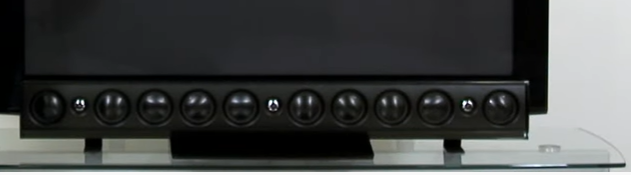
The passive soundbar from Definitive Technology has thoroughly impressed our audio team by producing an imitation of 5-channel surround sound without needing to buy extra system components.
The XTR-SSA5 soundbar uses a spatial array technology that allows the soundbar to make a 3D surround sound effect and enhance different audio layers despite the lack of rear speakers.
The anodized aluminum dome drivers in the speaker bar amplify the performance and optimize your viewing experience. The left and right drivers as well as the center channel are encased in aircraft-grade aluminum enclosure with a high gloss finish to protect the speaker bar from wear and tear.
What We Like
- Well-built and structurally sound
- Simulate 5-channel surround sound
- Patented spatial array technology
- Anodized aluminum dome drivers
- Aircraft-grade aluminum enclosure
- Flexible placement
- Sleek and glossy design
- Fits well with any TV
- Easy setup
What We Don't Like
- No wireless streaming
- Needs a subwoofer
Passive Soundbar Buyer’s Guide
To get the most out of the best passive soundbar, looking inside the sound bar cabinet is key. Important things to consider are the channels and the different advanced technologies, but even the connectivity and subwoofer can affect the end result in some products.
Our experts have created a simple checklist to aid you in looking for the best passive soundbars for your new home theater. If you want to buy a product that has an easy set-up and great features at an affordable price, here’s what to look for:
Sound Quality
Are there sound modes included in the system? Can the passive soundbar automatically optimize itself to deliver exceptional sound that varies depending on the content you play? The sound quality of the sound bar is the single most pressing point you want to consider in speakers, not the looks. Without a higher resolution, your passive soundbar won’t be a step up from your factory TV speakers.
Sound modes are included preset settings that make certain content pop. One example is the movie mode, which, in some passive soundbars, would enhance the dynamic range and emphasize the bass for better explosions. It will also dedicate itself to clarifying speech so you never miss the dialogue and think about what’s said in conversations.
When you use sound modes, even in active soundbars, you can get better room-filling sound.
Without sound modes, some passive soundbars also have the ability to automatically optimize itself to deliver the best performance for the content to ensure the sound quality.
Aside from sound modes, a dedicated center channel will enhance speech so you never miss a single whisper. Besides the center channel, you can also find speech enhancement abilities such as Clear Voice to enunciate all the dialogue spoken onscreen.
Channels
When we use soundbars for our reviews, one thing me make sure to check is the included channels. Soundbars in general can offer anywhere from 2 to 9 channels. 5.1 channels are the industry standard for true surround sound, and any number above that only adds to the sound effects and quality.
Passive soundbars such as the Definitive Technology XTR-SSA5 and KEF HTF7003 don’t come with one separate subwoofer and two rear satellite speakers, but thanks to the 5 channels within the sound bar itself, you can still get enveloping cinematic audio.
However, that’s not to say that you cannot enjoy immersive quality with home theater products designed with a lower channel number. You can usually get a good system with two or three-channel soundbars like the KEF HTF7003. Some popular soundbars feature advanced sound technology that can simulate true surround sound without a full 5-channel setup, but more on that later.
Advanced Sound Technology
You should look for soundbars that are designed to decode DTS and Dolby technology [1]. These two terms are the epitome of advanced audio capabilities and are the industry standard for first-class performance.
DTS and Dolby technology are two systems that help soundbars with fewer channels to simulate the illusion of digital surrounding sound. However, with a full 5-channel or more system setup, the advanced sound technologies will only add to the power of the drivers and existing immersive effects.
You may also spot products that are built with brand-specific technologies such as Sony’s S-Force and LG’s Meridian technology. Soundbars that are using more advanced technologies would bring professional-grade technology home with you for a full theater experience.
Looking for high-tech PC soundbars? You can check our list of the best computer soundbars here.
Connectivity
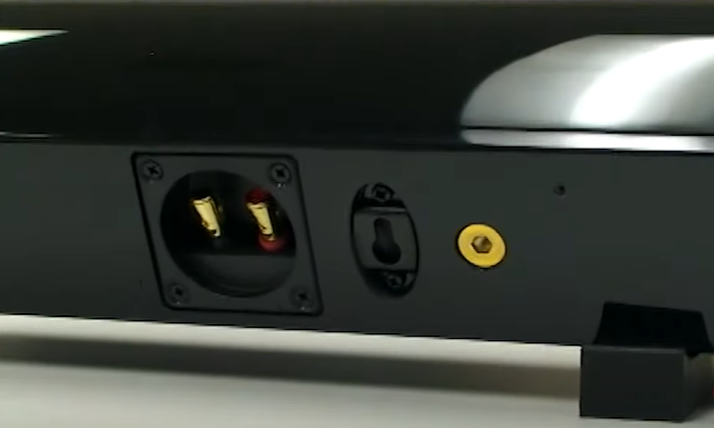
Similar to an active soundbar, a passive soundbar is built with both wired and wireless connectivity. Using HDMI is recommended by our experts across our reviews compared to other wired connections because it has the power to support higher quality signals. Some TVs may not have HDMI so digital optical is the next best option as it can also decode high quality audio although without the return channel.
Wireless features such as Bluetooth and Wi-Fi are often seen in active soundbars but can also be found in passive ones. Using wireless connectivity options allows users to stream content from external devices directly through the soundbar.
You can also connect your soundbar wirelessly to your TV to minimize clutter and build on the system to develop multi-room streaming with both Wi-Fi and Bluetooth. This way, you don’t need wires to connect everything.
Soundbar Placement
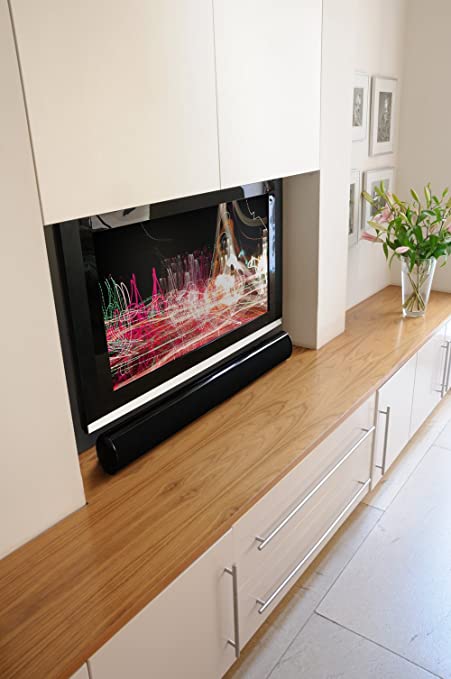
Soundbars are better space savers than surround sound speakers. They are sleek devices that are built to offer freedom of placement at home. They are generally lightweight and can be wall mounted or placed on a tabletop, whichever looks easy for you. Think about where you like to place it, but the key to the best performance is to place the soundbar at a little below eye level. This way, you can get the best use out of the receiver as well.
For wall mounted TVs, it’s very easy to place your soundbar or wall mount it right below your flatscreen. If your TV is free-standing, you can place a passive or an active soundbar in front of its base stand. You’ll have to make sure that it doesn’t obstruct the remote sensor, though, or the IR receiver won’t get commands.
If your soundbar is using wireless tech, it allows you to have more freedom with the placement. If there are other moving parts you need to connect such as subs and rear speakers, you can experiment with the location you like to find the best setting for any room in your home. Ensure that the placement can also complement with the acoustic panels installed in your room.

Price
You should also take into account your existing home theater components and the size of your soundbar to find the best location. The rule of thumb is to place the soundbar directly ahead of you and to spread the other components around the room to create an immersive experience.
Want to use other speakers with your soundbar? Find out whether adding surround sound speakers to soundbars is advisable or not next.
Does the price really reflect the flexibility and customization a passive soundbar affords you? It may seem counterintuitive for passive soundbars to have a more expensive price since they need to use an external amplifier to work properly, whereas active soundbars have everything you need for a full home theater system.
The price is because passive soundbars generally deliver much better performance than active ones. This is because an external amplifier will deliver crystal clear and louder audio an active soundbar cannot. However, if you are an avid audiophile or cinephile who is looking for more than a simple upgrade from basic TV speakers, then a passive soundbar offers much more flexibility for customization. You can also check budget home theater systems that still get the job done.
Subwoofer
Our audio experts believe that subwoofers are imperative to reflect the quality of a soundbar. Without one, the bass notes won’t be as audible in your content. Music and movie lovers can appreciate a subwoofer for its vibrating bass.
A subwoofer may be built into the device or come as an external component. For those who have a smaller space, a soundbar with an internal subwoofer, , like the KEF HT7003, can still accentuate the bass, though not as heavily as an external one. But on the bright side, you won’t need a big wireless subwoofer to fill a small room.
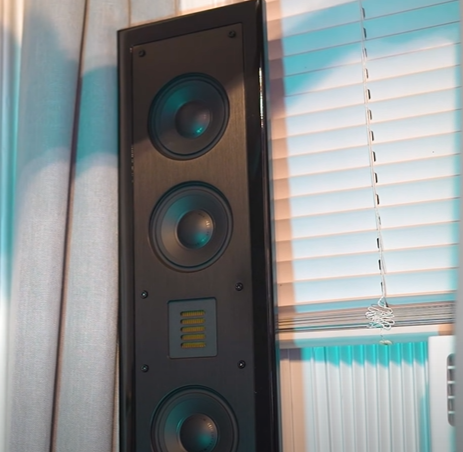
If space isn’t a restriction in your home, then a soundbar with an included external sub will bring forth all the previously latent deeper tones. If you want, you can also use the wall space for the soundbar.
Considering a more basic soundbar instead? Check out the reliable HW-M360 from Samsung.
FAQ
What is a passive soundbar?
A passive soundbar is a device that needs to be connected to an external A/V receiver and amplifier. It gives you the freedom to pair it with different sound management systems and offers potential for different speaker-amplifier combinations.
Do passive speakers sound better?
Yes, passive speakers sound better. This is due to the external receiver and amplifier that projects clearer sound as well as the focus on output rather than power.
Are passive subwoofers any good?
Yes, passive subwoofers are good. They need external amplifiers and receivers but have the flexibility to link up with multiple devices to create a more dynamic system.
Our Top Pick for a Passive Soundbar:
Definitive Technology XTR-SSA5 Ultra Slim Surround Speaker Bar

The Definitive Technology XTR-SSA5 is the best passive soundbar to emerge in the extensive testing done by our audio experts. It has a dynamic audio range, thanks to the dome tweeters and the utilization of spatial array technology. It features 5 speakers in one sleek and compact soundbar to create an immersive sound.
Made from tough materials, this passive soundbar uses anodized aluminum for all interior components including the domes and tweeters, resulting in a high-resolution soundbar with strong construction.
Having a hard time picking the right Bose soundbar for you? We got you covered.
