Home › TVs › Explained
TV & Audio · Updated June 2026

Do Smart TVs Have Bluetooth? (2026)

Short answer: yes — most modern smart TVs have Bluetooth, and you can use it to send sound to wireless headphones, pair a speaker, or connect a game controller. But not every set has it, some only use it for the remote, and there are real catches worth knowing before you rely on it. Here’s the honest, cited breakdown.

✓ Cited lab data ✓ Research-based ✓ Sources cited
By Willie Greer · Researched against manufacturer support docs & independent sources
Cross-checked against Samsung · LG · Sony · Roku · Vizio support docs and PCWorld · SoundGuys · What Hi-Fi · Every figure cited to a named source

Here’s the honest answer up front: the large majority of modern smart TVs have Bluetooth built in — but not every one, and there are real catches. If your TV is from roughly the last five or six years and runs a real smart platform (Samsung Tizen, LG webOS, Sony/Google TV, Fire TV, or a newer Roku TV), it almost certainly has Bluetooth you can use to send sound to wireless headphones or a speaker, and to pair a game controller. One widely cited estimate is that about 70% of post-2020 TVs — roughly three-quarters of smart TVs — have Bluetooth audio: common, but not universal (Soundcore; Spacehop).¹

This is a feature explainer, not a product review. Everything below is research drawn from manufacturer support docs and named independent sources, cited inline.

The quick answer

Yes, most do — here are the four caveats most “yes!” articles skip.

  1. Not all of them — and not all for audio. Some budget or older TVs (notably older Vizio sets) include Bluetooth that’s used only for the remote or the companion app, not for streaming audio out to headphones (AEANET).⁵
  2. Lip-sync delay is real. Bluetooth adds transmission lag, so sound can trail the picture. Standard Bluetooth can run up to 150 milliseconds, and even a low-latency codec is 40 to 50 milliseconds (PCWorld). Many newer TVs auto-compensate, and most have an A/V Sync slider to fix it.³
  3. Usually one audio device at a time. Most TVs pair to a single Bluetooth audio output at once — Samsung’s own doc states “only one Bluetooth device at a time can be paired to TV,” with 2022-and-later Samsungs adding two-device support (Samsung).²
  4. Quality is codec-limited. TVs typically fall back to the basic SBC codec — fine, but the lowest common denominator for both quality and lag (SoundGuys).⁴
Bottom line: Most smart TVs do have Bluetooth, and it’s great for private listening with one set of headphones. But for room-filling, lag-free, high-quality TV sound, an HDMI eARC connection (or Wi-Fi/WiSA) beats Bluetooth — more on that below.

How to check if YOUR TV has it

You don’t need the spec sheet. The fastest test is to open the sound or accessory menu and look for a Bluetooth pairing option — if it’s there, you have it. Here are the exact menu paths per platform, from each manufacturer’s own support docs:

Samsung (Tizen): Press Home → Settings → Sound → Sound Output → Bluetooth Speaker List — your headphones appear here when they’re in pairing mode. (Alternate path: Home → Source → Connection Guide → Audio Device → Bluetooth → Set Up Now.) If “Bluetooth Speaker List” exists, your Samsung supports Bluetooth audio out (Samsung).²

LG (webOS): Press Settings → All Settings → Sound → Sound Out → Use Wireless Speaker → Bluetooth Devices, then pick from the connectable devices. Older webOS may instead show LG Sound Sync / Bluetooth under Sound Out (LG; path corroborated by Avantree).⁶

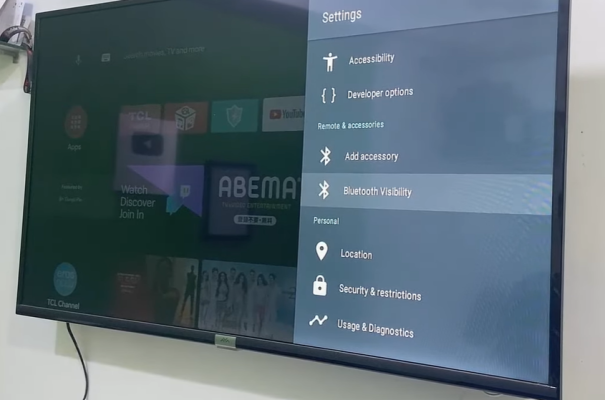
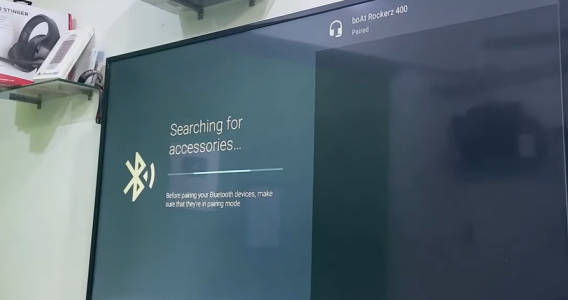
Sony (Google TV / Android TV): Open Settings → Remotes & Accessories → Bluetooth, then Add device / Pair accessory (set the accessory to pairing mode first). Sony also offers Sound Settings → Headphone speaker link to play the TV speakers and headphones together (Sony).⁷

Roku TV: On a Bluetooth-capable Roku TV, go to Settings → Remotes & devices → Bluetooth devices → Pair Bluetooth device — but only newer Roku TVs have this directly (see brand notes). On any Roku, you can also use private listening through the Roku mobile app (tap the headphones icon) (Roku; HelloTech).⁸

Vizio (SmartCast): Look under the audio/accessory settings for a Bluetooth Headphones option. The tell, per reporting: “If you see an option for Bluetooth Headphones, you’re golden. If that menu is missing or only shows ‘Voice Remote,’ your TV doesn’t support native audio streaming” — i.e., it’s Bluetooth-for-remote-only (AEANET).⁵

The universal fallback: No Bluetooth audio menu? You can still go wireless with a Bluetooth transmitter plugged into the TV’s audio output (3.5 mm or optical), or use the platform’s phone-app private listening (Spacehop; Roku).⁸

Editorial shortcut: the single fastest check is to open Sound Output / Sound Out and look for a Bluetooth or “Wireless Speaker” entry. If it’s greyed out or absent, the TV either has no Bluetooth audio or only uses Bluetooth for the remote.

How to check if your TV has Bluetooth — by brandTheProductAnalyst.com
Samsung (Tizen)
HomeSettingsSoundSound OutputBluetooth Speaker List
LG (webOS)
SettingsAll SettingsSoundSound OutUse Wireless Speaker → Bluetooth
Sony (Google TV)
SettingsRemotes & AccessoriesBluetoothAdd device
Roku / Vizio
SettingsRemotes & devicesBluetooth (newer models)
No menu? Use the mobile app for private listening.
See the option? You’re set. Don’t see it? Use a Bluetooth transmitter on the TV’s audio out, or the platform’s app.
Menu breadcrumbs per each manufacturer’s own support documentation (Samsung, LG, Sony, Roku, Vizio). Exact wording varies slightly by model year. Sources: Samsung,² LG,⁶ Sony,⁷ Roku/HelloTech,⁸ AEANET (Vizio).⁵

What you can connect

Bluetooth on a TV is for audio output and input accessories — not for casting video (that’s Wi-Fi / Chromecast / AirPlay). Realistically, you can pair:

  • Wireless headphones & earbuds — the number-one use: private late-night listening without waking the house. Supported across modern Samsung, LG, Sony, and newer Roku/Vizio sets via the menus above (Samsung; Sony).²⁷
  • Bluetooth speakers — the same “Bluetooth Speaker List / Use Wireless Speaker” path as headphones; good for a quick sound bump, though watch the lag and one-device limits below (LG; Vizio).⁶⁹
  • Game controllers / gamepads — pair a PS5 DualSense, Xbox Wireless Controller, or generic gamepad for cloud gaming and built-in TV games. On Samsung: put the controller in pairing mode, then Settings → Bluetooth Devices (or, by model year, Settings → Connection → External Device Manager → Input Device Manager → Bluetooth Device List) and “Pair and Connect” (Samsung; SamMobile; BGR).¹⁰
  • Keyboards & mice — handy for typing searches and logins on the TV; pair through the same Bluetooth devices menu (Spacehop).¹
  • The remote itself — many TVs use Bluetooth (not just IR) for their voice remote, so it works without line-of-sight. Important caveat: a TV can use Bluetooth for its remote yet still not offer Bluetooth audio out — the two are separate features (AEANET).⁵
Don’t conflate the two: “my remote is Bluetooth” does not prove “I can send TV sound to my earbuds.” That mix-up is the single biggest source of reader confusion, especially on Vizio and budget sets (AEANET).⁵

The catches

Bluetooth on a TV is genuinely useful, but set expectations — these are the four things that bite people.

1. Lip-sync / latency delay. Bluetooth has to encode, transmit, and decode the audio, which takes time, so sound can lag the picture. Per PCWorld, transmitting audio takes 40 to 50 milliseconds using a low-latency codec such as aptX LL, and standard Bluetooth delays can run up to 150 milliseconds.³ The basic SBC codec is worse — Avantree cites SBC system latency around 150–220 ms, enough to be visibly off.⁹ Two saving graces: TVs with onboard Bluetooth audio “often compensate on their own for latency” (PCWorld), and most TVs have a manual A/V Sync slider to dial it in.³

2. Usually one Bluetooth audio device at a time. Most TVs output to a single Bluetooth audio device at once — you generally can’t send sound to two pairs of headphones over the TV’s own Bluetooth. Samsung’s support page states “only one Bluetooth device at a time can be paired to TV,” and notes that Samsung TVs from 2022 onward can connect to two Bluetooth devices (Samsung).² Want multiple listeners? That’s where app-based private listening shines — Roku’s app supports up to four headphone streams (Roku).⁸

3. Codec / sound-quality ceiling. The TV and headphones must share a codec, and the universal default is SBC — fine for casual listening but the lowest common denominator for both quality and latency. Higher-quality or low-latency codecs (aptX, aptX LL, AAC, LDAC) only work if both the TV and the headphones support the same one, which TVs frequently don’t (SoundGuys; PCWorld).⁴³ So Bluetooth TV audio is compressed and codec-limited, not audiophile-grade.

4. Budget-TV exception — Bluetooth for the remote/app only. Some inexpensive or older TVs have Bluetooth hardware that’s locked to the remote or the companion app and won’t output audio. This was common on older Vizio SmartCast sets: “for years, Vizio SmartCast TVs used Bluetooth Low Energy (LE) strictly for pairing the mobile app, not for streaming audio,” and the menu tell is whether you see a real Bluetooth Headphones option versus only Voice Remote (AEANET).⁵ Newer Vizio M-Series/P-Series finally added Bluetooth audio, and older Roku TVs similarly lacked direct Bluetooth headphone support (pre-2019), relying on the app instead (HelloTech).⁸

What Bluetooth on a TV can & can’t do

The quick reference — what to expect, and where Bluetooth runs out of road.

What you want to doBluetooth on a TV?The honest detail
Send sound to one pair of wireless headphones✓ YesThe #1 use — private listening on most modern sets (Samsung; Sony).²⁷
Pair a Bluetooth speaker✓ YesSame menu as headphones; mind the lag for video (LG; Vizio).⁶⁹
Connect a game controller / keyboard✓ YesDualSense, Xbox controller, gamepads, keyboards (Samsung; BGR).¹⁰
Power a Bluetooth voice remote✓ YesWorks without line-of-sight — but separate from audio out (AEANET).⁵
Send sound to two devices at once✗ Usually not“Only one Bluetooth device at a time” — Samsung 2022+ allows two (Samsung).²
Get perfect lip-sync✗ Not guaranteedUp to ~150 ms delay; many TVs auto-compensate or offer A/V Sync (PCWorld).³
Get audiophile / lossless quality✗ NoCapped by the basic SBC codec on most TVs (SoundGuys).⁴
Cast video to the TV✗ NoThat’s Wi-Fi / Chromecast / AirPlay, not Bluetooth.
Use it on every TV✗ Not allSome budget/older sets use Bluetooth for the remote only (AEANET).⁵
Rule of thumb: Bluetooth is best for one person, one pair of headphones, casual listening. The moment you want room-filling, lag-free, high-quality sound, Bluetooth is the wrong tool — which leads to the next section.
What Bluetooth on a TV CAN and CAN’T doTheProductAnalyst.com
✓ CAN do
Send sound to one pair of wireless headphones
Pair a Bluetooth speaker
Connect a game controller or keyboard
Power a Bluetooth voice remote
Give you private, late-night listening
⚠ CAN’T / watch out
!Usually only ONE audio device at a time
!Can lag the picture (lip-sync delay)
!Quality capped by the basic SBC codec
!Not for casting video (that’s Wi-Fi)
!Some budget TVs use Bluetooth for the remote ONLY
For lossless, lag-free TV sound, use HDMI eARC or Wi-Fi/WiSA instead.
Consensus capabilities and limits of TV Bluetooth — no measured values, plain feature facts. Sources: Samsung,² PCWorld,³ SoundGuys,⁴ AEANET (Vizio).⁵

Better than Bluetooth for TV audio

If the goal is great TV sound — a soundbar, a surround system, or wireless speakers — Bluetooth is the convenient-but-compromised option. Two paths beat it:

  • HDMI eARC (wired, to a soundbar or AVR) — the gold standard for TV-to-sound-system audio. It’s the only common connection that carries lossless, object-based Dolby Atmos and keeps one remote controlling everything, with no Bluetooth lag. If your TV and soundbar both have an eARC port, use it (Crutchfield).¹¹
  • Wi-Fi / WiSA (wireless, done right) — purpose-built wireless-audio standards crush Bluetooth on latency and quality. Per What Hi-Fi and TechHive, WiSA carries up to eight channels of uncompressed 24-bit audio at ~2.6 ms latency — versus the ~40 ms that counts as “low” for Bluetooth — effectively lip-sync-perfect, lossless wireless surround (What Hi-Fi; Digital Trends; TechHive).¹²
The decisive line: use Bluetooth for private headphone listening. Use HDMI eARC (or Wi-Fi/WiSA) when you actually care about how the TV sounds in the room.
Wireless TV audio, ranked by lagTheProductAnalyst.com
Lower = better lip-sync Transmission latency (ms). Wired HDMI eARC = effectively zero added delay. WiSA ~2.6 ms (What Hi-Fi / TechHive) Bluetooth, aptX LL ~40–50 ms (PCWorld) Bluetooth, standard up to ~150 ms (PCWorld) Bluetooth, SBC ~150–220 ms (Avantree) 0 50 100 150 220 ms Every figure reported by the named sources.
Every latency figure is quoted from a named source: WiSA ~2.6 ms (What Hi-Fi/TechHive);¹² Bluetooth low-latency aptX LL ~40–50 ms and standard Bluetooth up to ~150 ms (PCWorld);³ Bluetooth SBC ~150–220 ms (Avantree).⁹ Wired HDMI eARC adds effectively no delay. This is why eARC/WiSA beat Bluetooth for TV sound.

Where to go next

Bluetooth is great for private headphones — but once you’ve decided it’s compromised for room sound, here’s the natural path forward:

The cleanest bridge from “does my TV have Bluetooth?” to better sound is simple: use Bluetooth for headphones, and route to eARC or Wi-Fi/WiSA the moment you care how the room sounds.

Frequently asked questions

Do all smart TVs have Bluetooth?
No — but most modern ones do. A widely cited estimate puts it at roughly 70% of post-2020 TVs, or about three-quarters of smart TVs (Soundcore; Spacehop).¹ The exceptions are mostly budget or older sets, and some of those include Bluetooth only for the remote or companion app, not for audio out (AEANET).⁵
How do I know if my TV has Bluetooth?
Open the sound or accessory menu and look for a Bluetooth or “Wireless Speaker” entry. On Samsung it’s Settings → Sound → Sound Output → Bluetooth Speaker List; on LG it’s Sound Out → Use Wireless Speaker → Bluetooth; on Sony/Google TV it’s Settings → Remotes & Accessories → Bluetooth → Add device. If the option is missing or greyed out, the TV likely has no Bluetooth audio (Samsung; LG; Sony).²⁶⁷
Why is my TV’s Bluetooth audio delayed or out of sync?
Bluetooth adds transmission lag — up to ~150 ms on standard Bluetooth, and ~40–50 ms even on a low-latency codec (PCWorld).³ Many TVs auto-compensate, and most have an A/V Sync (Audio Sync) slider to nudge the audio back into line with the picture.³
Can a TV connect to two Bluetooth devices at once?
Usually not. Most TVs pair to one Bluetooth audio device at a time — Samsung’s doc says “only one Bluetooth device at a time can be paired to TV,” though Samsung TVs from 2022 onward support two (Samsung).² For multiple listeners, app-based private listening is the better route — Roku’s app supports up to four headphone streams (Roku).⁸
My TV has Bluetooth but won’t connect headphones — why?
Often because that Bluetooth is reserved for the remote or companion app, not audio output — common on older Vizio sets. The tell is whether the menu offers a real “Bluetooth Headphones” option versus only “Voice Remote” (AEANET).⁵ If so, use a Bluetooth transmitter on the TV’s audio output, or the platform’s app, instead.
Is Bluetooth the best way to get sound from my TV?
For private headphone listening, yes. For room sound, no — Bluetooth is codec-limited (usually SBC) and adds lag (SoundGuys; PCWorld).⁴³ For lossless, lag-free audio use HDMI eARC to a soundbar, or a Wi-Fi/WiSA system (WiSA runs at ~2.6 ms vs. Bluetooth’s ~40 ms-plus) (What Hi-Fi; TechHive).¹²
Every factual claim above is honest research drawn from named manufacturer support docs (Samsung, LG, Sony, Roku, Vizio) and independent sources (PCWorld, SoundGuys, Avantree, What Hi-Fi, Digital Trends, TechHive, and others), cited inline. Every latency figure is reported by the named source. Some links on this page are affiliate links; if you buy through one, we may earn a commission at no extra cost to you — it never influences what we recommend.
Sources: [1] Soundcore — How to connect Bluetooth headphones to TV (“70% of post-2020 TVs have Bluetooth audio”) & Spacehop — Do smart TVs have Bluetooth (“~3/4 of smart TVs”; transmitter fallback) · [2] Samsung — Pair Bluetooth headphones to a Samsung Smart TV (menu path; “only one Bluetooth device at a time”; 2022+ two-device) · [3] PCWorld — Bluetooth latency, audio lag, and how to minimize it on TVs (“40 to 50 milliseconds … low-latency codec”; “up to 150 milliseconds”; TVs auto-compensate; A/V Sync; codec must match both ends) · [4] SoundGuys — Understanding Bluetooth codecs (SBC default; codec must match on both ends) · [5] AEANET — Connect Bluetooth headphones to a Vizio TV (Bluetooth-for-remote/app-only caveat; “if you see Bluetooth Headphones, you’re golden … only shows ‘Voice Remote'”) · [6] LG — LG TV: How to connect Bluetooth headphones (Sound Out → Use Wireless Speaker), path corroborated by Avantree · [7] Sony — Headphones: Bluetooth connection to Google TV / Android TV (Remotes & Accessories → Bluetooth → Add device); Sony — Listen on BRAVIA TV and headphones simultaneously (Headphone speaker link) · [8] Roku — How to use Bluetooth headphone mode (direct pairing on newer models; up to 4 via app) & HelloTech — How to connect Bluetooth headphones to Roku TV (model history) · [9] Avantree — Audio Latency: What You Need To Know (SBC ~150–220 ms; aptX LL ~32–40 ms) · [10] Samsung — Pair a Bluetooth controller/gamepad to your Samsung TV; SamMobile — Connect Samsung TV with Xbox/PlayStation controllers; BGR — Devices your DualSense controller can connect to · [11] Crutchfield — Best Dolby Atmos soundbars (eARC is best for Atmos / one remote) · [12] What Hi-Fi — WiSA: everything you need to know (8 channels uncompressed 24-bit); Digital Trends — What is WiSA?; TechHive — WiSA low-latency wireless multi-channel audio (~2.6 ms latency). We cite named manufacturer support docs and independent sources.